
Maybe you have been doing practice questions for weeks and your scores will not move. Maybe you opened a Candidate Performance Report you did not want to see. Or maybe you are an internationally educated nurse who knows the clinical content well but finds the way NCLEX questions are written confusing. Whatever brought you here, you are wondering if one-on-one help is the missing piece.
That is a smart question to ask, not a sign of weakness. Plenty of strong nurses use a tutor at some point. The trick is knowing whether you need one, what good tutoring looks like, and how to avoid paying for something that does not move you forward.
Let's sort that out.
Do You Need an NCLEX Tutor?
Not everyone does. For 2026 year-to-date (NCSBN dashboard, latest exam date Oct 17, 2026), 91.2% of first-time, U.S.-educated NCLEX-RN candidates passed, and many candidates prepare with self-study, school resources or a review course. A tutor is not a requirement for passing.
The picture changes for some groups. In the same 2026 year-to-date data, repeat U.S.-educated candidates passed at 50.9%, first-time internationally educated candidates at 53.9%, and repeat internationally educated candidates at 36.4%. Those numbers do not decide your outcome, but they show that some paths are harder, and targeted help can matter more on those paths.
One-on-one help is most worth considering if you:
- Failed a previous attempt and your report shows Below or Near the Passing Standard in specific areas
- Have studied consistently for weeks but your practice performance has stalled
- Know the content but keep missing prioritization, delegation or "what next" questions
- Are internationally educated and adjusting to U.S.-style clinical judgment questions
- Struggle with accountability or anxiety and need structure from another person
If none of those fit, a strong study resource and a clear plan may be all you need.
What a Good Tutor Actually Does
A tutor should not simply reteach nursing school. You already sat through those lectures. Good tutoring targets how you think through questions.
Diagnoses Your Reasoning, Not Just Your Score
The most useful thing a tutor can do is watch you work a question out loud. Do you skip key cues in the stem? Talk yourself out of the right answer? Pick the "nicest" option instead of the safest? A percentage on a practice set cannot show you that. A person listening can.
Builds Your Plan Around the Test Plan and Your Report
If you have tested before, your Candidate Performance Report is a two-page breakdown showing whether you were Below, Near or Above the Passing Standard in each content area and in clinical judgment. A good tutor uses that report, along with the 2026 test plan weights, to decide where your sessions go. Management of Care alone is 15–21% of items, so a weak result there deserves real attention.
Teaches Clinical Judgment as a Process
Since the Next Generation NCLEX launched on April 1, 2023, the exam measures clinical judgment through case studies and newer item types. Strong tutors teach the NCSBN Clinical Judgment Measurement Model steps: recognize cues, analyze cues, prioritize hypotheses, generate solutions, take action and evaluate outcomes. You should leave sessions with a repeatable process, not a pile of tips.
What That Looks Like in a Session
Say the question is: "Four clients were just admitted. Which client should the nurse assess first?" You choose the client with a new hip fracture who rates pain 8 out of 10. A good tutor asks you to name the cues for each client. As you talk, you notice the client with COPD has a new respiratory rate of 30 and is using accessory muscles. The tutor does not just give you the answer; they point out that you prioritized pain over an airway and breathing problem, and then give you three more questions that test the same habit. That is the kind of targeted feedback self-study struggles to replicate.
How to Choose the Right Tutor for You
Tutors range from licensed nurse educators to recent grads who passed last year. Before you commit money, ask these questions.
- Are you a licensed RN, and do you have experience with the current exam? You want someone who understands the Next Generation NCLEX format and the 2026 test plan, not only the pre-2023 exam.
- How do you assess where I am? Look for a diagnostic step, such as reviewing your report or watching you work questions, before the tutor builds a plan.
- What does a typical session look like? The answer should involve you working questions and explaining your reasoning, not only listening to a lecture.
- What materials do you use? Find out whether you need to buy extra resources and whether they overlap with what you already own.
- What are your rates, packages and cancellation policy? Pricing varies widely between tutors, so get it in writing before you start.
- Can I talk to past students? Reviews from people in a situation like yours, such as repeat test-takers or internationally educated nurses, tell you more than general praise.
| Green flags | Red flags |
|---|---|
| Starts with a diagnostic, asks about your report and history | Promises you will pass or "guarantees" a result |
| Has you explain your reasoning on questions | Spends every session lecturing content |
| Clear schedule, end point and pricing | Pushes long packages before meeting you |
| Teaches clinical judgment steps you can reuse | Sells "secret" topic lists or result tricks |
Tutor, Course or Self-Study: Which Fits You?
| Option | Best for | Trade-offs |
|---|---|---|
| One-on-one tutor | Repeat test-takers, stalled progress, reasoning gaps | Usually the highest cost per hour; quality varies a lot |
| Group review course | People who like live structure and a set schedule | Less personal feedback; moves at the group's pace |
| Self-study with a guide and practice | First-time testers, budget-conscious learners, busy schedules | Requires discipline; no one watching your reasoning |
Many candidates combine these. A common approach is to build content with a solid guide, practice daily, and add a few tutoring sessions only for the areas that stay stubborn. If you are planning your weeks, our NCLEX study plan guide can help you fit sessions in.
Getting the Most From Every Session
- Bring your Candidate Performance Report or a list of your weakest categories to the first meeting.
- Do a question set before each session so you arrive with real misses to discuss.
- Keep an error log: the question topic, why you chose your answer, and why the right answer was better.
- Agree on a goal and an end date so tutoring stays focused instead of open-ended.
What Most Students Get Wrong About Hiring a Tutor
Hiring a tutor to replace studying. A tutor can sharpen your thinking, but the content review and question practice between sessions are still yours. One hour a week does not substitute for daily work.
Picking based on a pass guarantee. No tutor can guarantee an NCLEX result. Anyone who promises it is selling confidence, not skill.
Waiting too long after a fail. You can retake 45 days after your exam. If you want help, start early in that window so you have time to apply what you learn. Our guide on what happens if you fail the NCLEX walks through the retake steps.
Skipping the free official tools. The NCLEX Tutorial and NCLEX Exam Preview on NCLEX.com show you the real item formats. Use them alongside any tutoring.
Build Your Foundation Before You Book Sessions
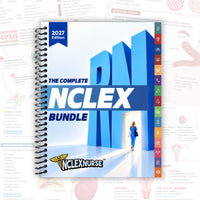
Tutoring works best when the content is already organized in front of you. The Complete NCLEX Bundle from The NCLEX Nurse includes a 434-page visual hardcover study guide for NCLEX-RN and NCLEX-PN that connects signs and symptoms, pathophysiology, diagnostics, lab values, pharmacology, nursing interventions, prioritization, delegation and safety. It comes with online eBook access and one year of the Guru AI Assistant with unlimited prompts. Between sessions, you can ask it to explain a topic, break down a condition or medication, compare diagnoses, work NCLEX-style reasoning, quiz you and answer follow-up questions.
For extra practice, join the MedSchoolGuru NCLEX QBank waitlist with a free account. The QBank is coming in January 2027, and guide owners get first access plus a discount for Complete NCLEX Bundle owners.
Frequently Asked Questions
How much does an NCLEX tutor cost? Rates vary widely depending on the tutor's credentials, location, and whether sessions are one-on-one or in small groups. Ask for pricing, packages and cancellation terms in writing before you start, and remember the NCLEX registration fee is a separate cost.
Is tutoring for the NCLEX worth it? It can be, especially for repeat test-takers, internationally educated nurses, and anyone whose practice performance has stalled despite steady studying. For many first-time testers, a strong study guide and consistent practice are enough.
How many tutoring sessions will I need? There is no set number. Many students do best with a focused block of sessions aimed at specific weak areas, plus daily independent practice, rather than open-ended weekly meetings.
Can a tutor guarantee that I pass? No. The NCLEX is a computerized adaptive exam scored against a passing standard, and no tutor or course can promise a result. Be cautious of anyone who claims otherwise.